
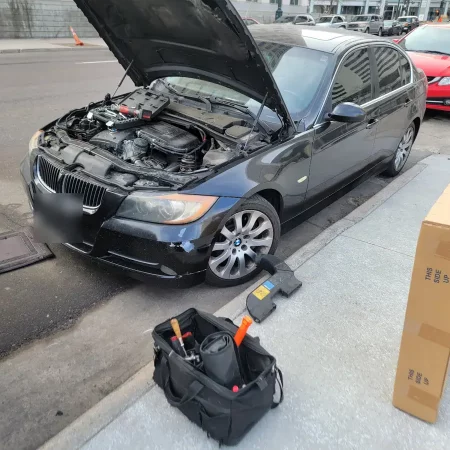

Clicking, slow cranking, or total silence? Three different parts can cause the same no-start, and replacing the wrong one costs you money and a second breakdown.
When we get a no-start call, we don't start by swapping parts. We put a multimeter and a scan tool on the car, in your driveway or parking lot, and let the numbers tell us whether it's the battery, the starter, or the charging system. Then, with your OK, we get the part and fix it.
Call 720-507-7918When a car won't start, the battery gets blamed first. Sometimes that's right. But the battery, the starter, and the alternator are one system: the battery stores power, the starter spends a huge burst of it to turn the engine, and the alternator refills it while you drive. If any link is weak, the symptoms overlap.
That's how people end up with a brand-new battery that dies again in a week, because the alternator that was supposed to charge it was the real problem. A few minutes of testing before any parts come out is the cheapest repair step there is.
Rapid clicking, headlights that dim hard when you turn the key, a crank that gets slower on cold mornings, or a car that starts fine after a jump.
One solid click or nothing at all while the lights stay bright, or an intermittent no-crank that works on the third try and then doesn't.
A battery or warning light on while driving, dimming lights, electronics acting strange, or a car that dies while moving or after a jump that "fixed" it.
If the engine turns over normally but never catches, that's not a battery or starter problem. It points to fuel, spark, or a sensor, and needs a different diagnosis.
These are the common patterns, not a diagnosis. Plenty of cars break the pattern, which is why we measure.
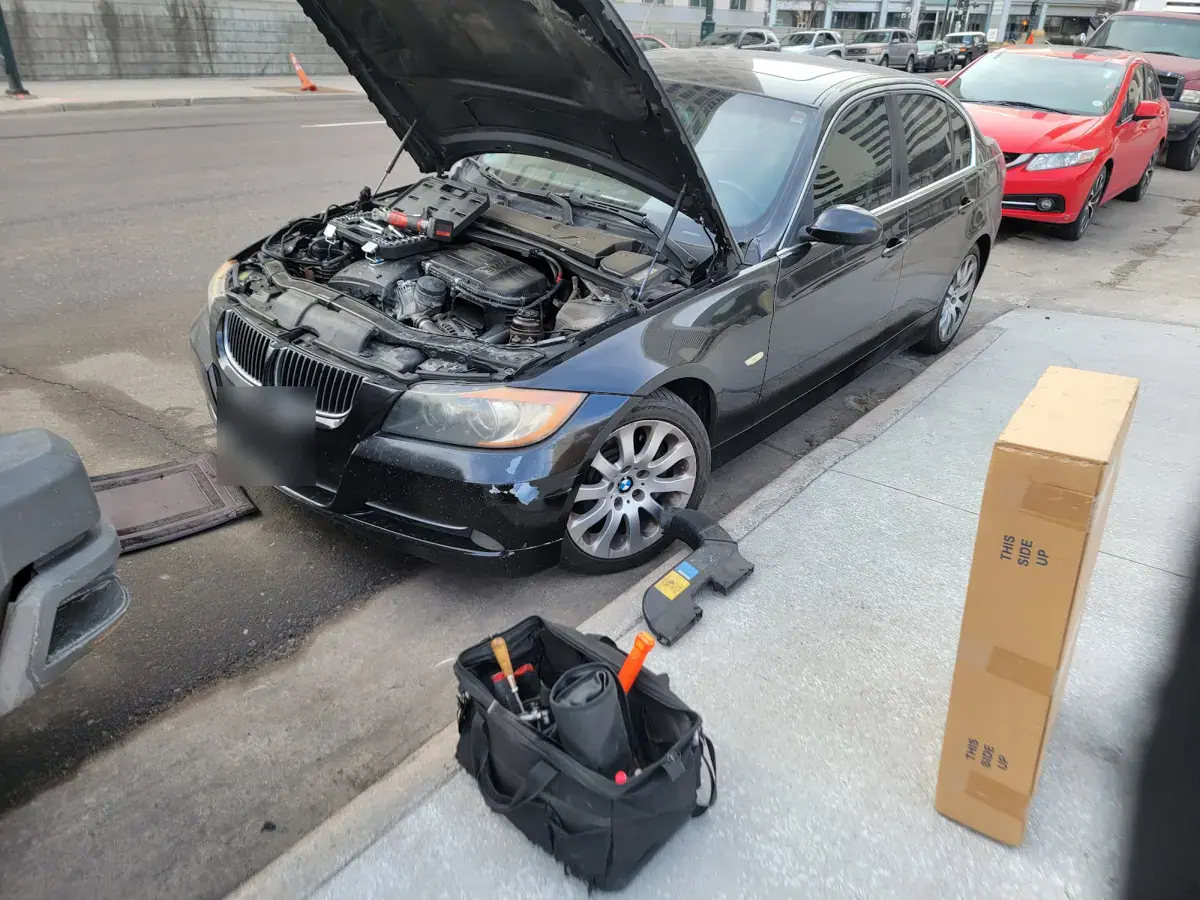
The exact sequence depends on the car, but a no-start visit generally follows this order:
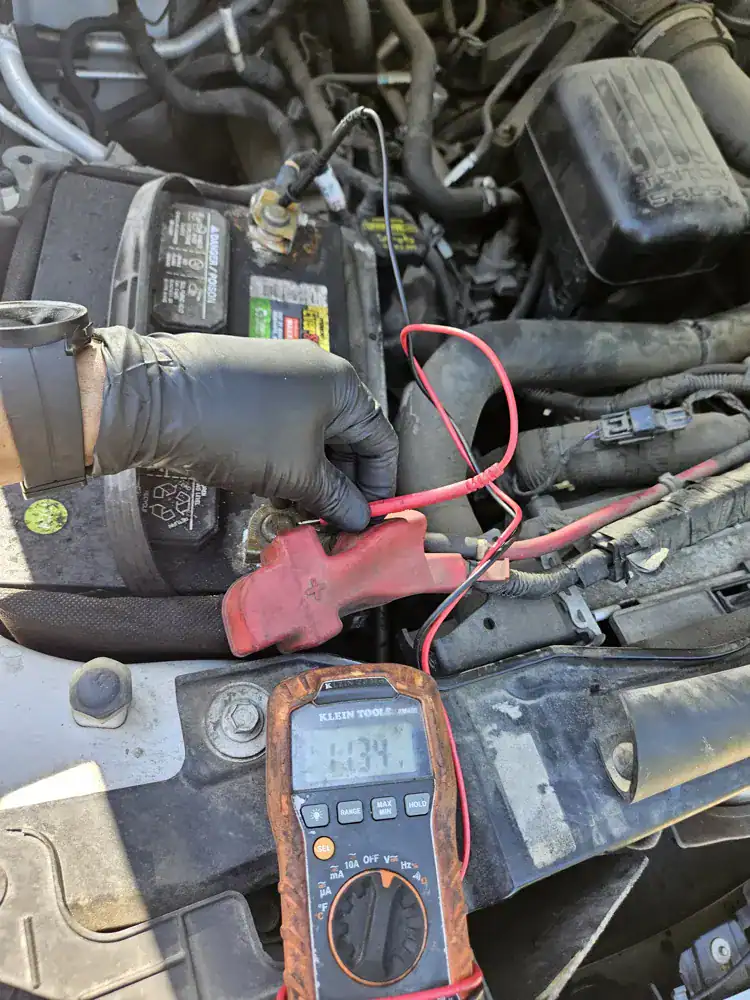
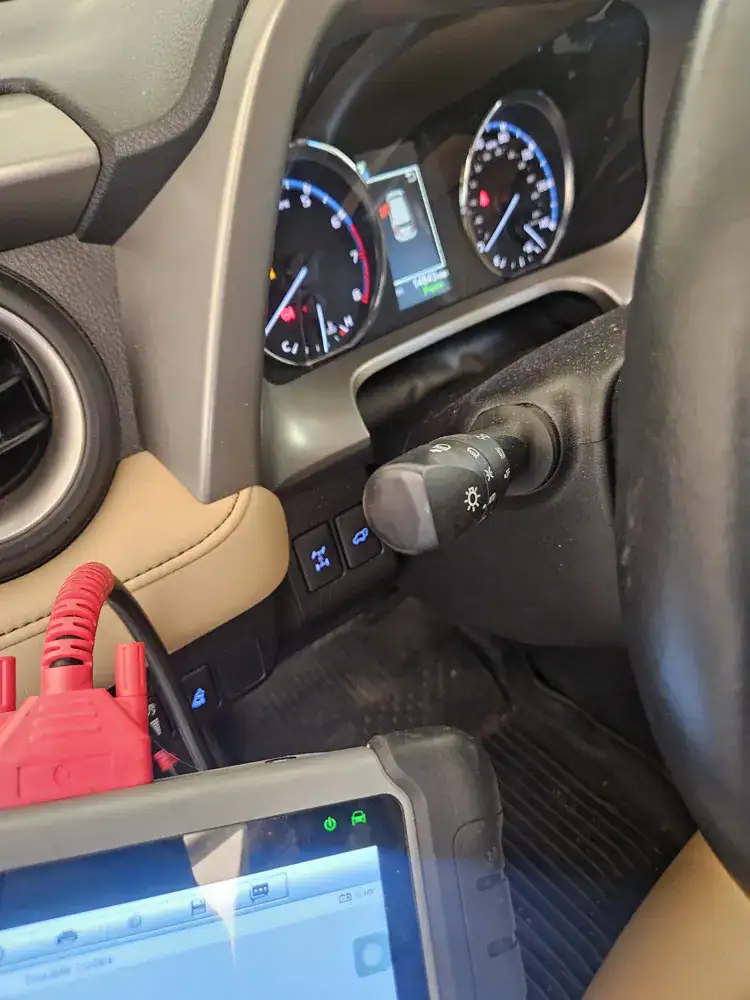
Why this matters to your wallet: those steps take minutes. Skipping them is how a corroded cable end gets "fixed" with a new battery.
When the battery holds voltage, the connections are clean, and the starter still won't turn the engine, the starter itself is the likely culprit. Once you approve the repair, we pick up the new starter and replace it right where the car is parked. The photo below is a starter swap done on-site: the old (dusty) starter and its replacement, still in its packaging, laid out beside the tools.
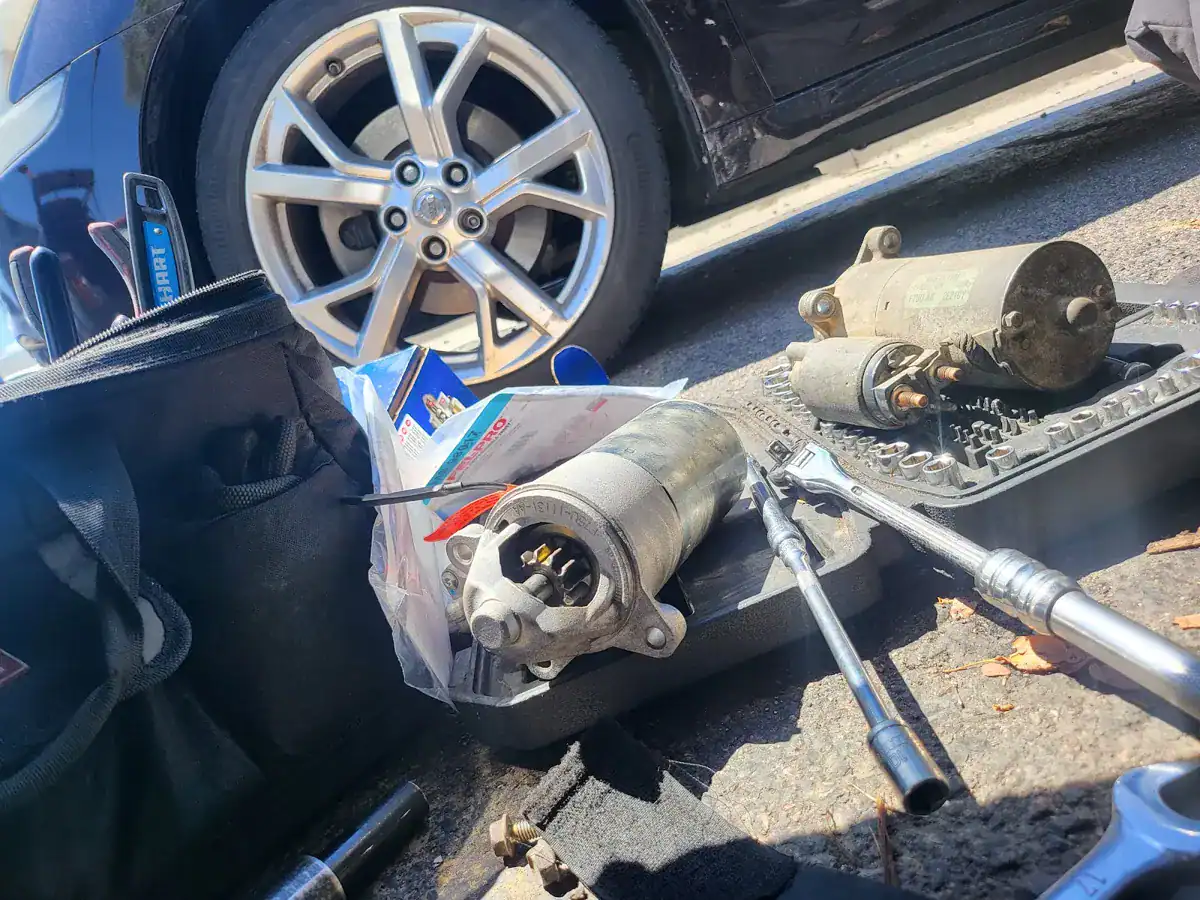
Starter access varies a lot between vehicles. Some are easy to reach, some take real time, and a few need the kind of lift access a shop has. If yours is in that last group, we'll tell you honestly rather than start a job we can't finish properly.
Denver winters are hard on batteries: cold thickens engine oil and cuts a battery's output at the same time, so a weak battery that survived the summer often quits on the first freezing morning. Lots of short trips can also leave a battery under-charged, even when the alternator is fine.
If your battery keeps dying and nothing obvious is wrong, something may be drawing power while the car is off. That takes proper electrical testing to find, and it's another reason we measure instead of guessing.
Please don't keep cranking a car that won't start, and don't jump a battery that's cracked, leaking, or bulging. Call us instead.
Listen and look. Rapid clicking, dimming dash lights, or a slow, labored crank usually point at the battery or its cable connections. A single loud click (or nothing) with bright lights and a healthy battery points toward the starter circuit. It's a good starting clue, not a verdict, which is why we confirm with voltage readings before replacing anything.
Not by itself. A jump can get a car running even when the real culprit is a failing alternator, so the car starts, then dies again later. Testing the charging voltage with the engine running is what separates a battery problem from a charging problem.
Yes. A battery can show good resting voltage and still collapse under the load of cranking, and corroded or loose cable ends can block current even when the battery is healthy. That's why we measure voltage while the engine cranks, not just at rest.
Yes. Batteries, starters, and alternators are jobs we do at your driveway, parking lot, or curbside. Most of the time we can diagnose and replace in the same visit: once you approve the repair, we pick up the parts and finish the job.
It depends on the vehicle and which part has actually failed, which is exactly why we diagnose first. We quote by phone: call 720-507-7918, tell us the year, make, and model and what you're seeing, and we'll give you a quote for your car.
Tell us what you're seeing and where the car is parked. We come to you, diagnose it, and tell you exactly what failed. Once you approve the repair, we get the parts and finish the job.
Call 720-507-7918